A Vulnerable Dependency Was Found. Does It Actually Matter?
Most flagged dependencies are not exploitable in your application. Five questions that separate the ones that matter from the ones that generate tickets — and what to do when the answer is genuinely no.

Webcuris Research
Security Engineering
·3 min read
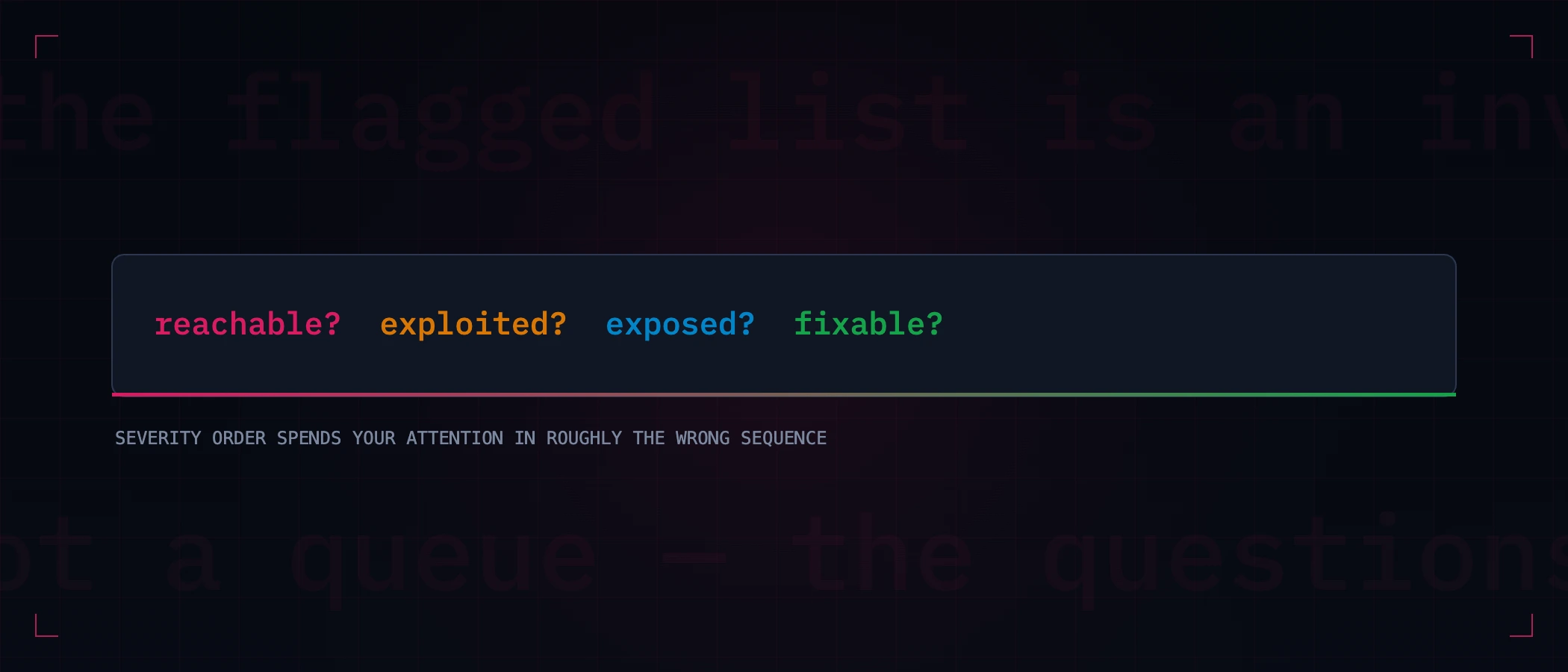
Your scanner flagged forty vulnerable dependencies. Some fraction of those are genuinely dangerous in your application; most are not, and the difference is not visible in the advisory. Working through them in severity order — the default — spends your attention in roughly the wrong sequence. Five questions fix that.
1. Is the vulnerable code reachable from yours?
A CVE describes a flaw in a function, not in a package. If your code never reaches that function, the flaw is present and not exploitable. The classic case is a library whose vulnerability is in a parser you never call, or in a CLI entry point when you import it as a module. This is the single largest source of legitimate deprioritisation — and the one most tools cannot answer for you, so it usually needs a developer who knows the codebase to look for five minutes.
2. How deep is it, and can you even move it?
A direct dependency you can upgrade in an afternoon is a different problem from one buried four levels down inside a framework that pins it. For transitive findings, check whether the parent has released a version that moves the pin — and if it has not, whether your package manager's override mechanism (overrides, resolutions, a constraints file) can force it without breaking the parent's assumptions.
3. Is anyone actually exploiting it?
Severity says how bad exploitation would be; it says nothing about whether exploitation is happening. EPSS gives you the probability, and CISA's KEV catalogue gives you confirmed activity. A medium-severity CVE on the KEV list outranks a critical nobody has ever weaponised — and the reverse mistake, patching alphabetically by severity, is how the actually-exploited one waits three weeks.
4. What is exposed if it goes wrong?
The same vulnerable package matters differently in an internet-facing service that handles untrusted input than in a build-time tool that runs on your CI runner. Not because the build tool is safe — a compromised build is a supply-chain event — but because the attack requires a different, harder starting position. Rank by what an attacker would have to already have.
5. Does a fix exist yet?
If no patched version has shipped, the decision is not when to upgrade — it is whether to mitigate around it, replace the dependency, or accept and monitor. Writing that decision down, with a date to revisit, is the difference between a considered risk and a forgotten one.
Putting it in order
| Reachable? | Being exploited? | Do this |
|---|---|---|
| Yes | Yes | Now. This is the small set that justifies interrupting work |
| Yes | No | Next sprint — and watch the probability, it moves |
| No | Yes | Confirm unreachability properly, then schedule; do not dismiss |
| No | No | Batch with routine upgrades. Most of the list lives here |
The recurring trap is treating the flagged list as a queue rather than an inventory. It is an inventory; the queue is what these questions produce from it.
A Webcuris repository scan computes risk from severity, exploit probability and exposure together rather than severity alone — and runs locally, so your source never leaves the machine. What it hands you is closer to the queue than the inventory, with the evidence behind each ranking visible so you can disagree with it.
Keep reading
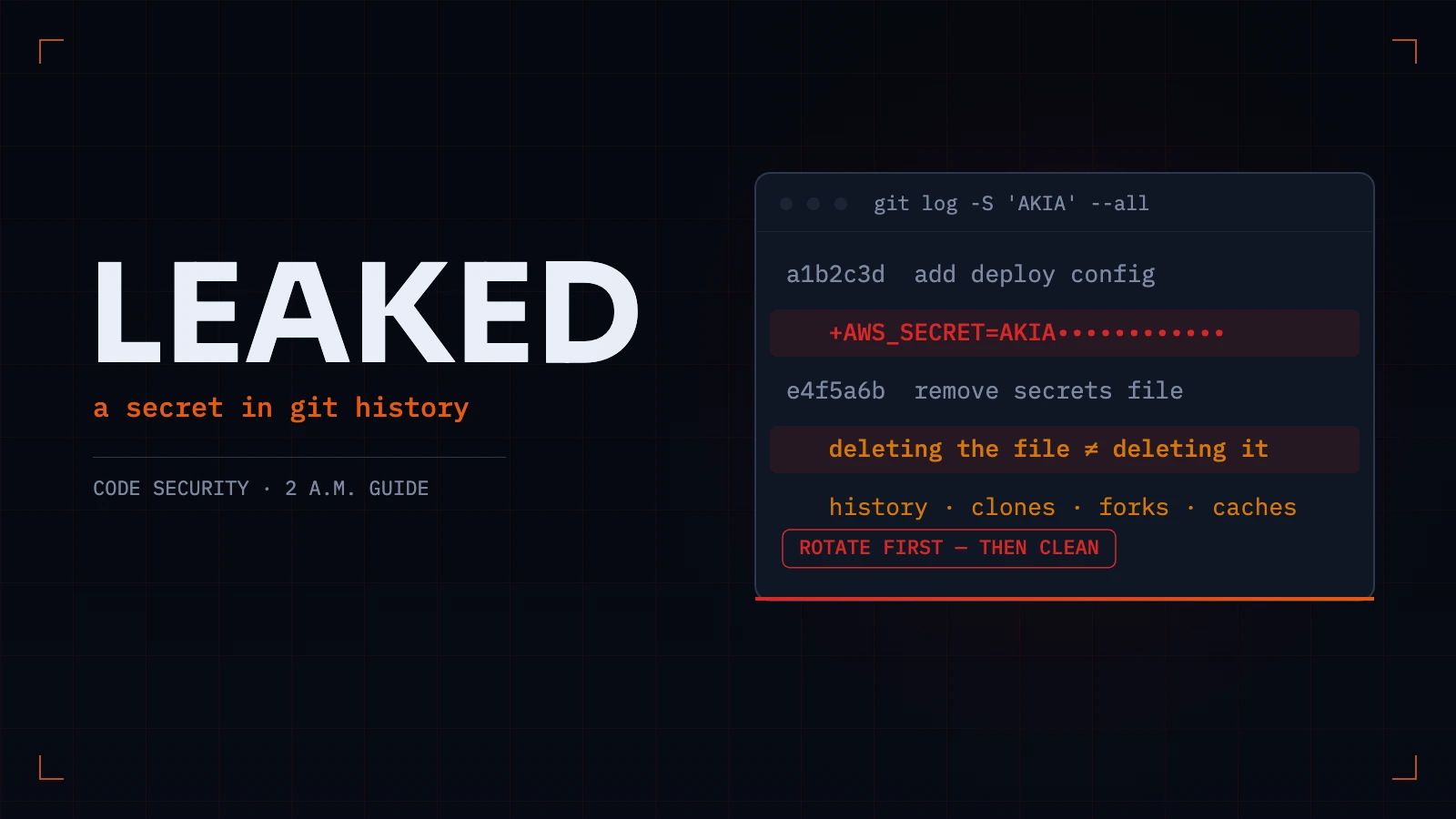
How to Find Secrets Already Committed to a Git Repository (and What to Do at 2 A.M.)
Deleting the file does nothing — the secret lives in history, clones, forks and caches. The search commands, the rotate-first order of operations, and how to prove the old credential is actually dead.
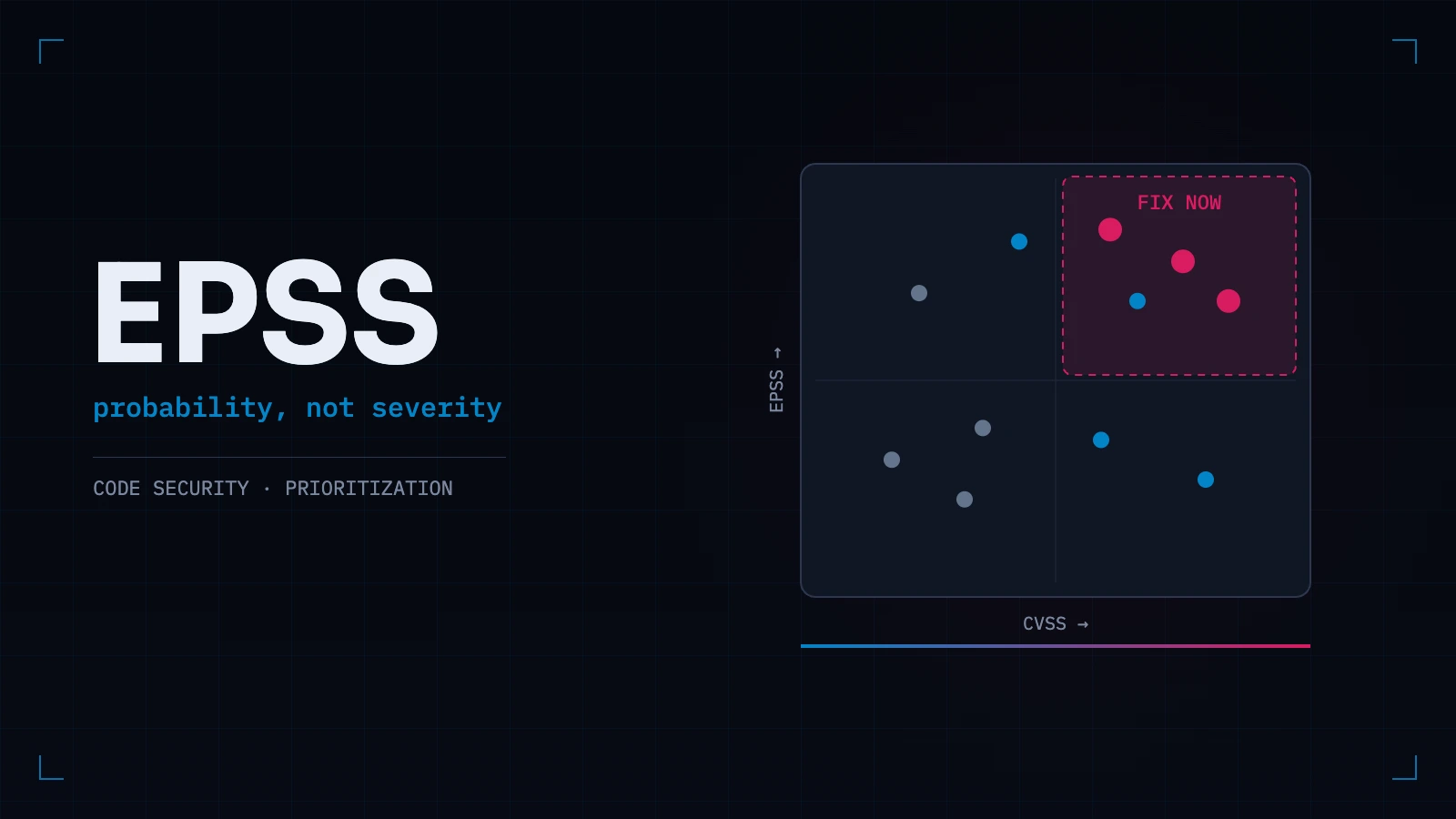
EPSS vs CVSS: Why "Critical" Doesn't Mean "Fix First"
CVSS measures how bad exploitation would be. EPSS measures how likely it is in the next 30 days. Confusing the two is why teams patch alphabetically while the actually-exploited bug waits.
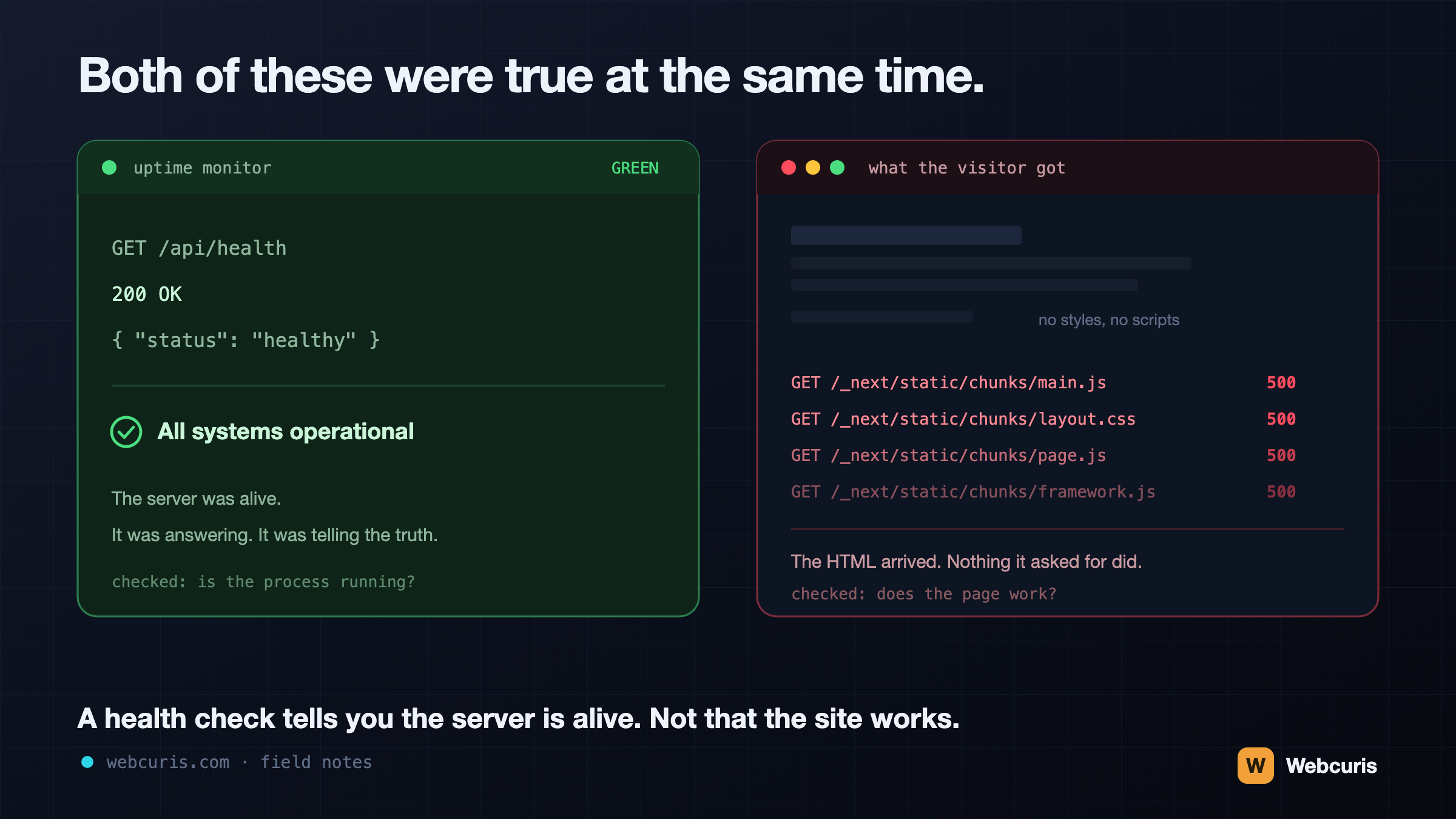
Your monitoring is watching the wrong end of the request
Our uptime monitor was green while every visitor saw an unstyled page. It was the second time every server-side signal agreed the site was fine while the browser disagreed — and the two incidents share a shape worth naming.
Everything this article describes is what Webcuris checks continuously — scan one page free, no signup.